©
So Venice lives, as lives no other thing!
In this short section, you'll find some poems dedicated to Venice, written by lesser-known English and American poets of the 19th century. My thanks go to the writer and translator Michele Brocca, who allowed me to publish these splendid poems which he collected in a booklet entitled “Come nessun'altra cosa” (Like No Other Thing), edited by Opuscola Defensiva.
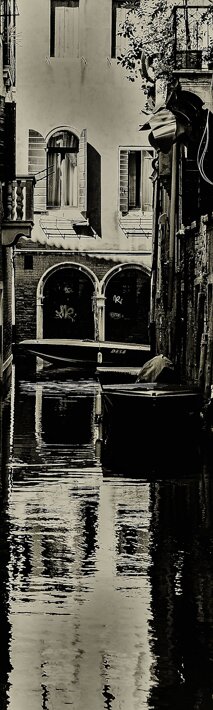
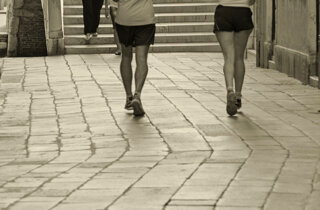
Venice Streets
Meandering like its canals
Venetian streets sing underfoot.
Who wore away the stone cobbled streets?
Who walked down to the shore?
Who gazed out at the Adriatic?
Who's dreams were lost in Venice's stream of streets?
Licentious lovers loved in Venice's streets, kissed on her bridges,
Crossed under by gondola and over by foot.
Proposed at the piazza San Marco.
Kissed, while the Gran Canal wound her way down.
Down into the sea,
where the menace that is the world, Venice shuns.
Rialto, Doge, Basilica, St. Mark, pigeons!
All evoke that lagoon city of streets.
Originally refugees, incolae lacunae ("lagoon dwellers")
Venetians, gave not only a place for the dispossessed,
but a place for the world to see, feel and taste.
Art, war, politics, commerce, spice and silk.
Venice with her ribbon of streets, alleways and bridges
saw the Renaissance, the crusades, and the Black Death.
Glassware, paintings, sculptures, religion, refugees all
synonymous with that floating city.
A city returning to the water she arose from.
Subsiding with grief as she drowns in elegant dacay.
Camelia Japonica (pseudonimo)
from Hellopoetry.com
The invitation to the Gondola
Come forth; for night is falling,
The moon hangs round and red
On the verge of the violet waters,
Fronting the daylight dead.
Come forth; the liquid spaces
Of sea and sky are as one,
Where outspread angel flame-wongs
Brood o'er the buried sun.
Bells call to bells from the island,
And far-off mountains rear
Their shadowy crests in the crystal
Of cloudness atmosphere.
A breeze from the sea is wafted;
Lamp-litten Venice gleams
With her towers and domes uplifted
Like a city seen in dreams.
Her water-ways are a tremble
With melody far and wide,
Borne from the phantom galleys
That o'er the darkness glide.
There are stars in heaven, and starry
Are the wandering lights below:
Come forth! for the Night is calling,
Sea, city, and sky are aglow!
John Addington Symonds
from “New and old - A volume of verse”
James R. Osgood and Company, Boston, 1880
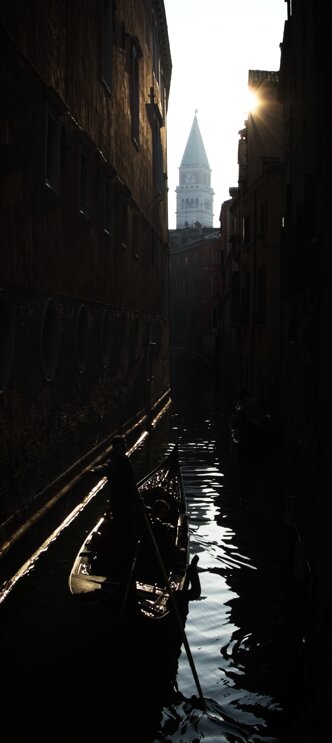
Summer evening
The sapphire deepens; night draws apace,
Moulding high walls and towers to filmy ghosts;
Each outline fades of younder shallow coasts
That were so lately girt by sunset grace.
Some white yachts slumber in their anchored space,
And warm lights twinkle amid mast and posts,
While o'er the smooth ways that our city boats
Flit firefly gondolas in mimic race.
O Venice! Like some visage intimate dear
Whose beauty's grown o'ersure for questioning,
Worn old by years thy charm seems but more near;
If wan, thy poets would thee freshly sing;
And who with thee for comrade dwelleth here
See in thee, as in Love, undying Spring!
Lady Lindsay
“From a Venetian Balcony”, London 1903
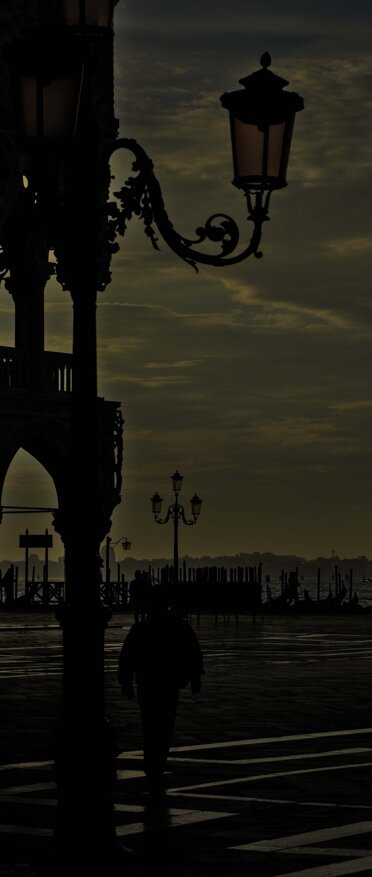
Down at Venice
One burnished cloud first turned a jagged prow.
The waking water nestled deep among
Her murky gondolas, that bow on bow
Freighted with shadows at the molo swung.
Soon palace and canal paled into sight,
Fainting as watchers whose long vigil wanes;
Till Dawn's approach across the waves of night
Flushed the rose blood in sleeping Venice' veins.
Then up the dazzling steps that lead to God,
One radiant sunbeam and a lone white dove
Santa Maria's holy threshold trod,
A shrine of morning lit by Light and Love!
Loud warned the chime of mass o'er quay and home,
Calling soft flocks of doves to greet the day
'Mid sculptured saints and angels round the dome
While market-women followed in to pray.
Martha Gilbert Dickinson
from “The Cathedral and other poems”
Charles Scribner's Sons, New York, 1901
The Venetian Serenade
When along the light ripple the far serenade
Has accosted the ear of each passionate maid,
She may open the window that looks on the stream,
She may smile on her pillow and blend it in dream;
Half in words, half in music, it pierces the gloom.
"I am coming -Stali- but you know not for whom!
Stali- not for whom!"
Now the tones become clearer, you hear more and more
How the water divided returns on the oar.
Does the prow of the Gondola strike on the stair?
Do the voices and instruments pause and prepare?
Oh! they faint on the ear as the lamp on the view.
"I am passong -Premi- but I stay not for you!
Premi- not for you!"
Then return to your couch, you who stifle a tear,
Then awake not, fair sleeper, but believe he is here;
For the young and the loving no sorrow endures,
If to-day be another's, to-morrow is yours.
May, the next time you listen, your fancy be true.
"I am coming -Sciar- and for you and to you!
Sciar- and to you!"
The Venetian words here used are the calls of the gondoliers:
Stali- to the right
Premi- to the left
Sciar- stop the boat
Richard Monckton Milnes
from “Selections from poetical works of Richard Monckton Milnes”,
John Murray, London 1863
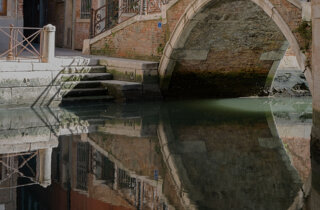
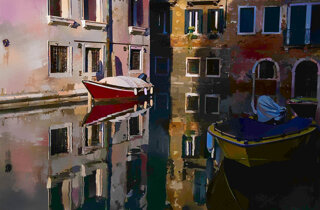
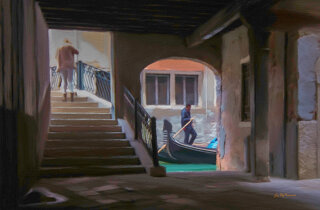
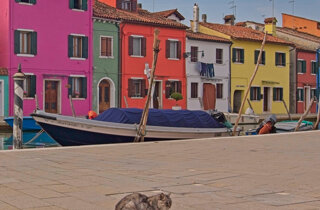
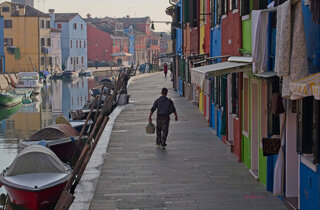
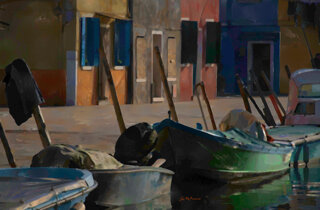
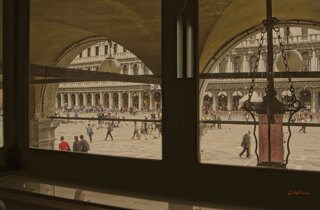
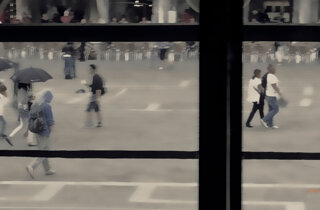
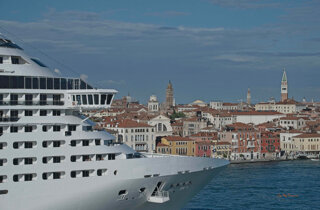
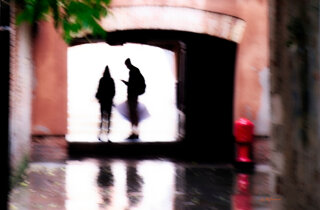
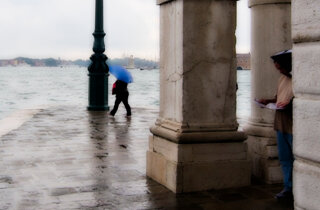
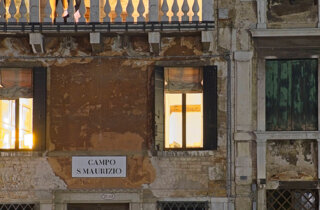
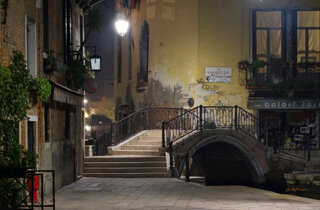
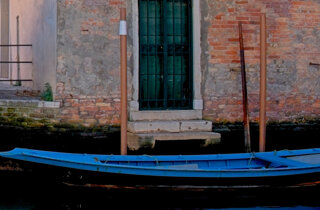
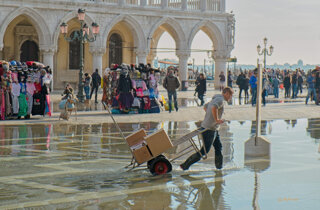
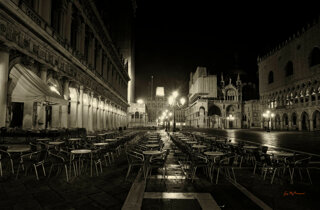
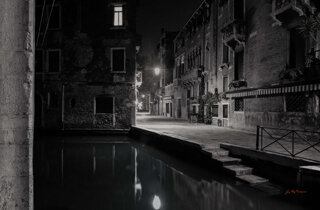
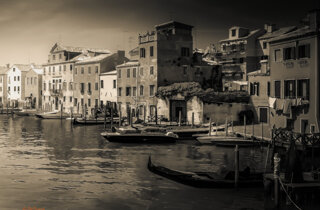
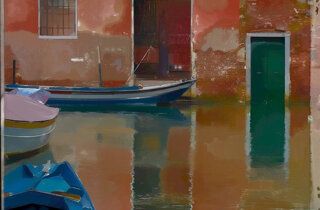
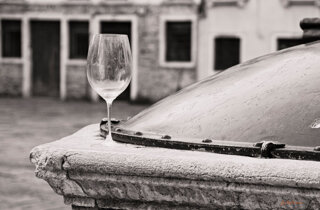
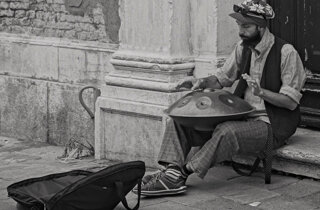
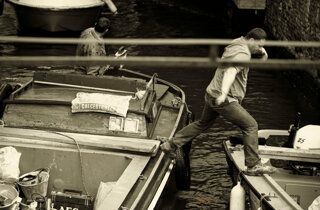
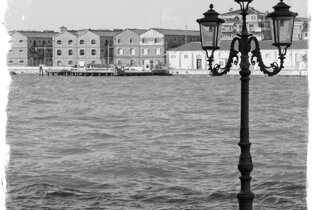
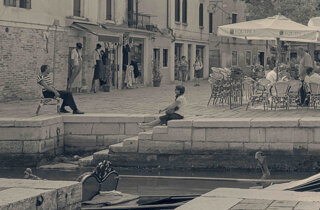
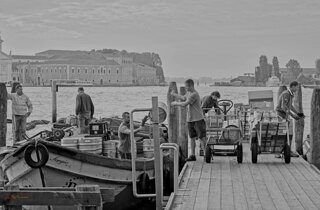
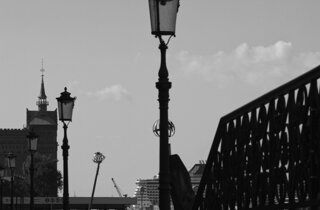
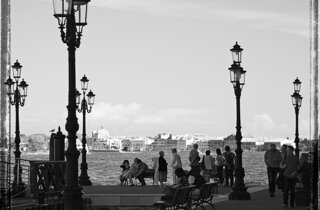
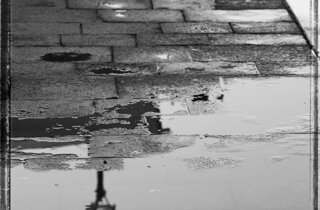
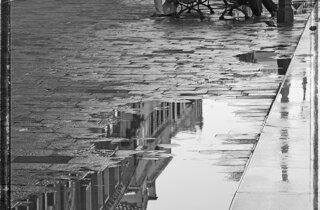
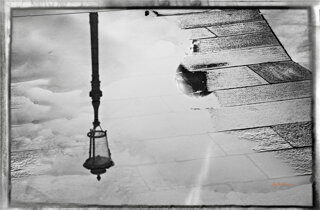
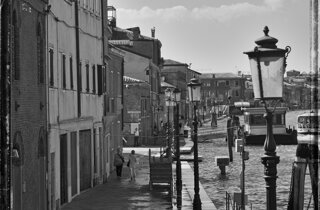
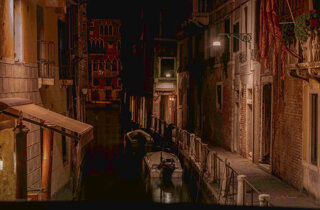
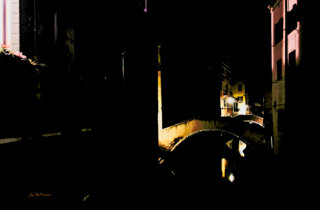
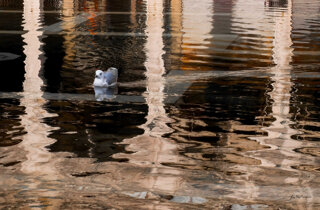
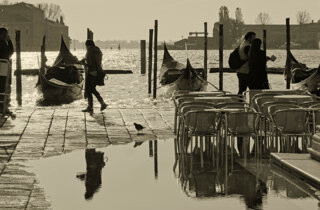
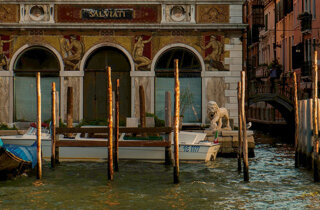
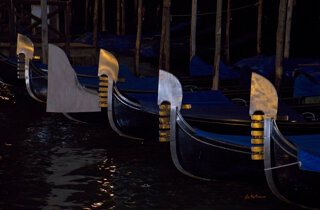
My photographs
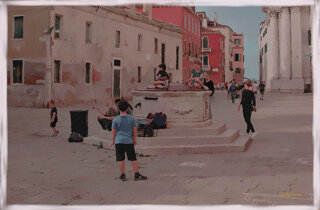
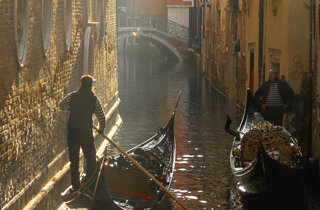
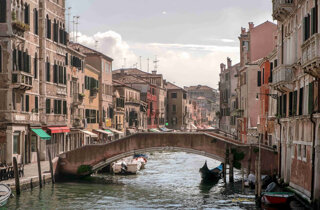
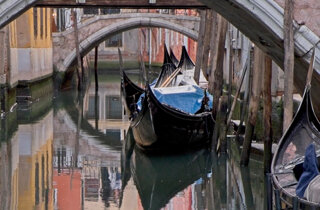
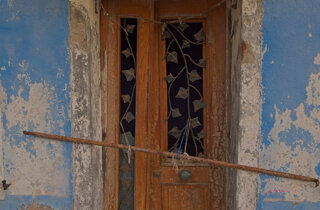
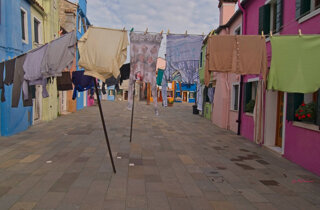
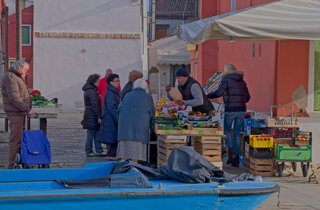
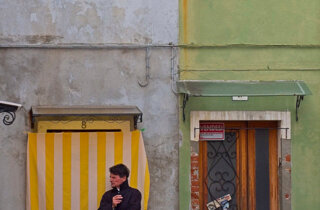
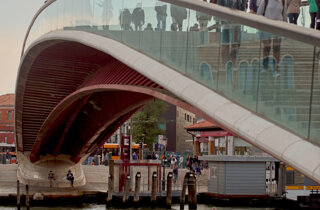
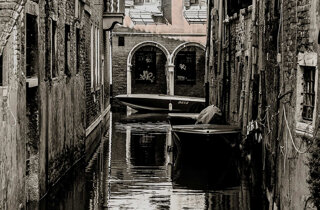
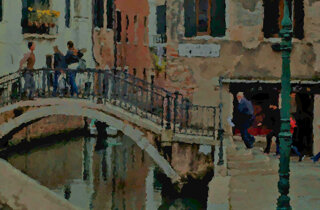
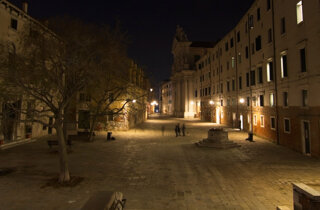
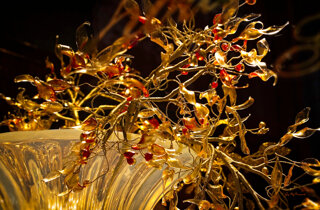
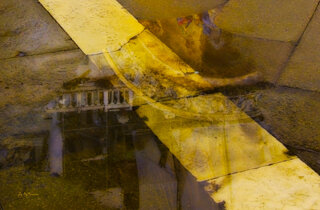
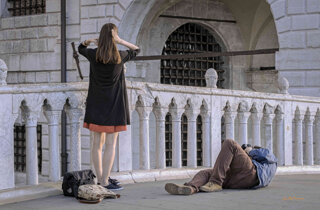
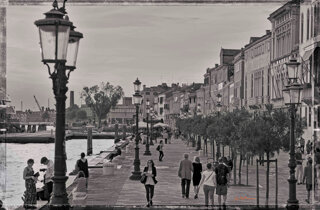
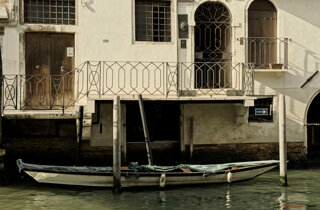
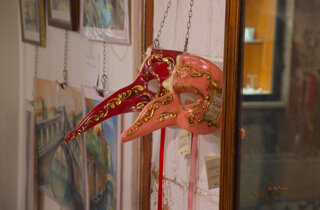
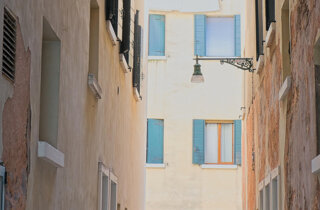
Venice is probably the most photographed city in the world, certainly the most
assaulted by tourists. It's not easy for a photographer to tackle the challenge.
While inspiration flows along crowded canals, leaking over the unsteady pavement
of shady alleys, at the end of the day, the overawed photographer may come back
to their hotel with a camera full of ‘tourist postcards’.
Furthermore, the comparison with great photographers like
Fulvio Roiter and Gianni Berengo Gardin is a huge burden for any photographer.
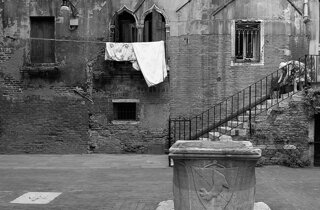
Venice is a city poised between magnificence and the struggle for survival,
between stained glasses and the dampness of its streets, between the courtesy of
its artisans and the impatience of its residents.
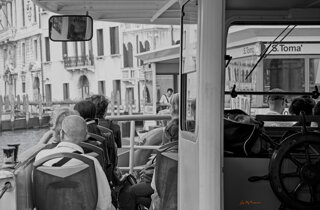
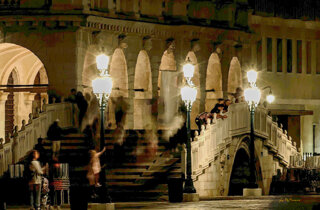
They struggle to carry on with their daily lives in the "tourist Babel," on the over-
packed “vaporetti”.
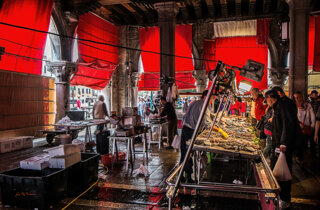
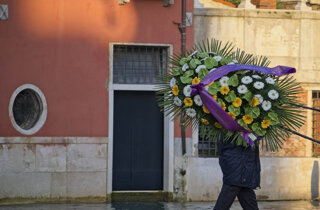
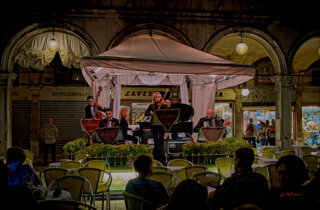
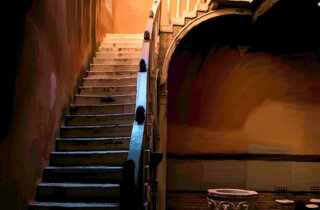
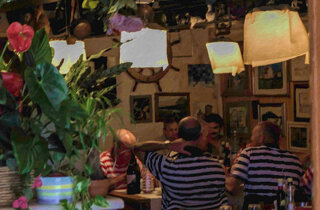
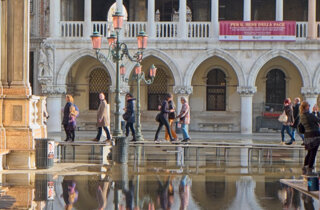
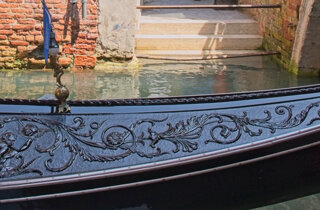
In this great kermesse, I snatched a few pictures, sometimes avoiding
involuntary jostling,
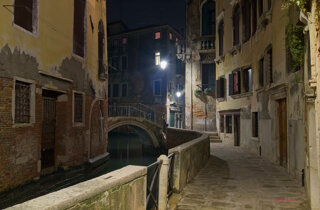
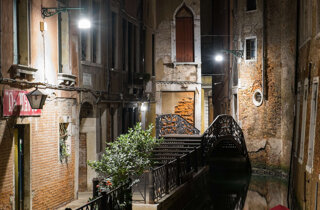
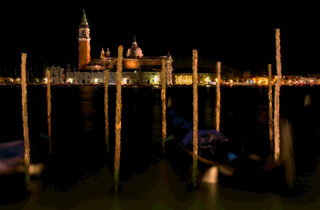
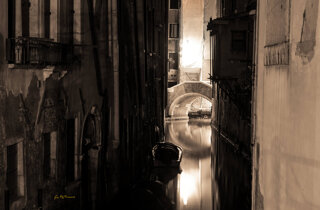
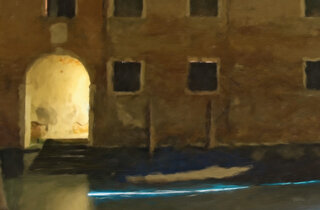
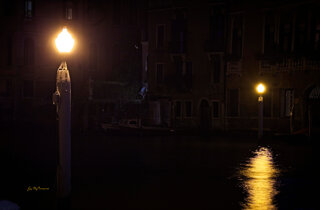
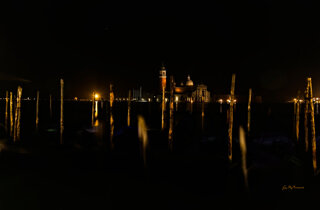
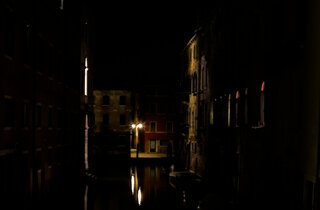
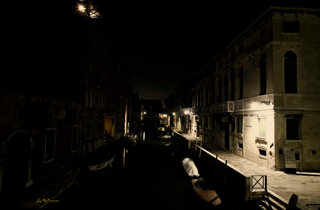
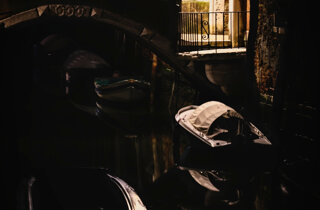
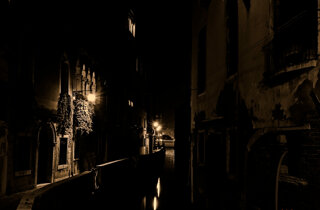
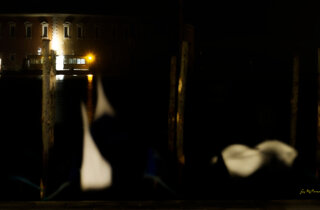
sometimes taking refuge in the night where, at a certain hour, Venice returns to
being what it once was, the “Serenissima”.
Please do not use images on website, blogs or other media without my explicit permission.
Copyright G.M. Panzani. All rights reserved.
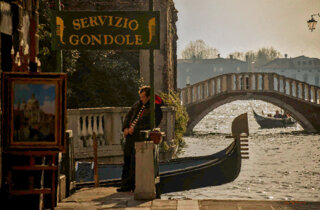

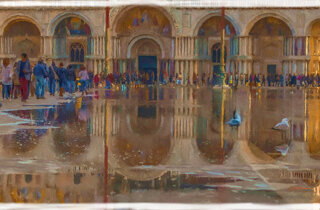
.jpeg "venice%20-%20high%20water%20is%20entering%20s.marco%20square.jpeg")
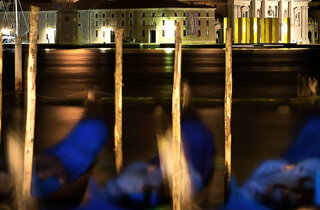
.jpeg "venice%20-%20in%20front%20of%20s.giorgio%20island%202.jpeg")